One Television, One Kilobyte
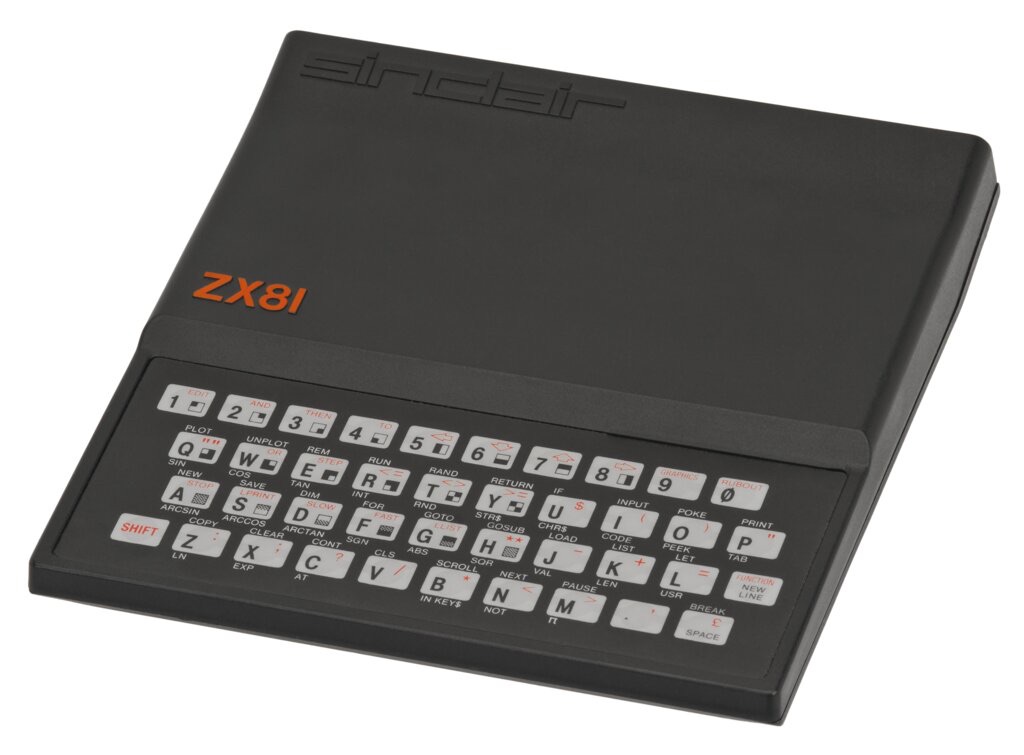
Photo by Evan-Amos, CC BY-SA 3.0, via Wikimedia Commons

Something set me thinking about the ZX811 today, and once I’d started I couldn’t stop. The first computer I ever touched. A black plastic wedge about the size of a paperback, one kilobyte of memory, a flat membrane keyboard with no give in it at all. I’d have been twelve, maybe thirteen. Forty-odd years ago now, and I can still feel it under my fingers.
The thing I remember most vividly isn’t even the machine. It’s the manual.2 They don’t make them like that any more — it was sublime, honestly, a proper ring-bound book that taught you from nothing. I worked through it cover to cover, typing the listings in, running them, watching them do their thing. And then changing one line just to see what happened. Make the number bigger. Swap two lines round. Take that bit out — does it still work? Why not? Hours went like that. I didn’t know it was the same process loop I’d still be running four decades later. I just thought it was the best game in the world.
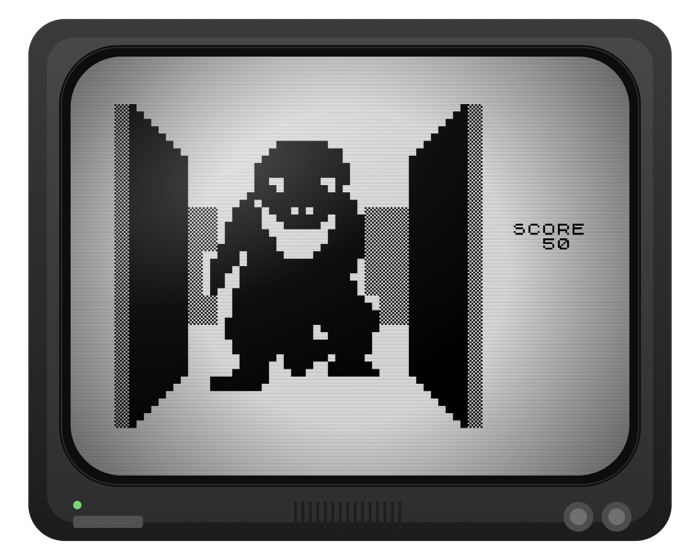
The magazine listings were another matter. You’d see this gorgeous artwork next to the code — spaceships, dungeons, whole worlds — and you’d type the whole thing in over an evening, hunt down the one character you’d got wrong that stopped it running, finally get it going, and… a few blocky black shapes shuffling about on a white screen. Nothing like the picture. I wasn’t even really disappointed. I was too busy being amazed that those lines made that happen at all.
That 16KB, 3.25 MHz machine ran Doom. No, not really, but we did have 3D Monster Maze, which was the Doom of its day.
Image Credit: 3D Monster Maze (Malcolm Evans, 1981), screenshot via Wikipedia

And I had to earn the time to do any of it. We had one television in the house — one — and the ZX81 plugged straight into it, so computing meant taking over the only screen the whole family shared. So I did housework for it. Washing-up, hoovering, mowing the lawn, washing the family car, whatever was going, traded for an hour at the keyboard. Funny the things that stick. I’ve never since had to work quite that literally for a go on a computer, and I don’t think I’ve ever valued an hour at one quite as much either.
Then there was the tape. No disk, no anything — you saved to a cassette recorder, an ordinary one, and loaded back the same way, this banshee shriek of noise while the screen tore itself into stripes. And the waiting. What felt like hours of it. Watching, hoping, only for the thing to fall over two-thirds of the way in. The volume had to be just so — too quiet and it wouldn’t catch, too loud and it garbled — and finding that sweet spot was black magic. Rewind. Nudge the dial. Try again. Hold your breath at the bit where it died last time. Sometimes the fifth attempt worked when the first four hadn’t, and none of us ever knew why.
The real heartbreak, though, was the RAM pack. One kilobyte is nothing, so like everyone I had the 16K pack that plugged into the back to give you room to actually do something. And it wobbled. The connection was just a friction fit on an exposed edge, and the slightest knock — a nudge of the desk, a heavy footstep, an elbow, a shadow in the wrong place — could jolt it and crash the whole machine dead. No autosave. No save at all unless you’d done it yourself, to tape, with all the ritual that involved. So when the wobble caught you halfway through an hour of carefully typing a listing in, line by single-keyed line, it took the lot. Black screen. Start again. I learned to save early and save often the hard way, aged twelve, at the hands of a loose connector. Blu-tack was the technical solution to the problem. But it never stopped feeling tenuous and I’ve never quite lost the little flinch I get near unsaved work. Don’t think I’d want to.
But the joy. The first time I got a program of my own working — not from the manual, not from a magazine, mine, dreamed up and built line by line — that was something else entirely. I couldn’t tell you now exactly what it was; a daft little loop, I think, that filled the screen with my own name scrolling away over and over. It was nothing. And it was one of the purest hits of happiness I’ve ever had. I’d told a machine what to do, in a language it understood, and it had just… done it. Exactly, instantly, without a word of complaint. You only get to feel that for the first time once, and I got to feel it on a one-kilobyte wedge wired into the family telly, in between rounds of washing-up.
After the ZX81 came a Commodore 64, an Acorn Electron — “it’ll help with my schoolwork”, an Atari 800XL (and with it a 14-inch colour TV of my own), then the great leaps to a 520ST then a 1040ST, an Amiga 1200 — that whole tribal, fiercely-argued-over era when the machine you owned said something about who you were. Then PCs, as one did. Then the original Bondi-blue iMac, which is where my Mac story started. A PowerMac G5 after that, and then a long line of MacBooks right up to the one I’m typing this on, which has something like thirty-six million times the memory of that first little wedge. I’m not exaggerating for effect. The maths just lands there.
Funny how it works out. A hobby — mucking about with games and listings on a borrowed telly in 1982 — and it quietly set the course of my entire working life without my ever quite deciding it should. The loop I fell into back then, the one the manual taught me — type something, run it, change a line, run it again — is the very same principle I use today. Forty years on, I’m still writing code. And after all of it, all those machines, all those years, I’m still faintly amazed that I can get this little electronic box to bend to my will.
Footnotes
-
Brainchild of the legendary Sir Clive Sinclair. ↩